Doctor
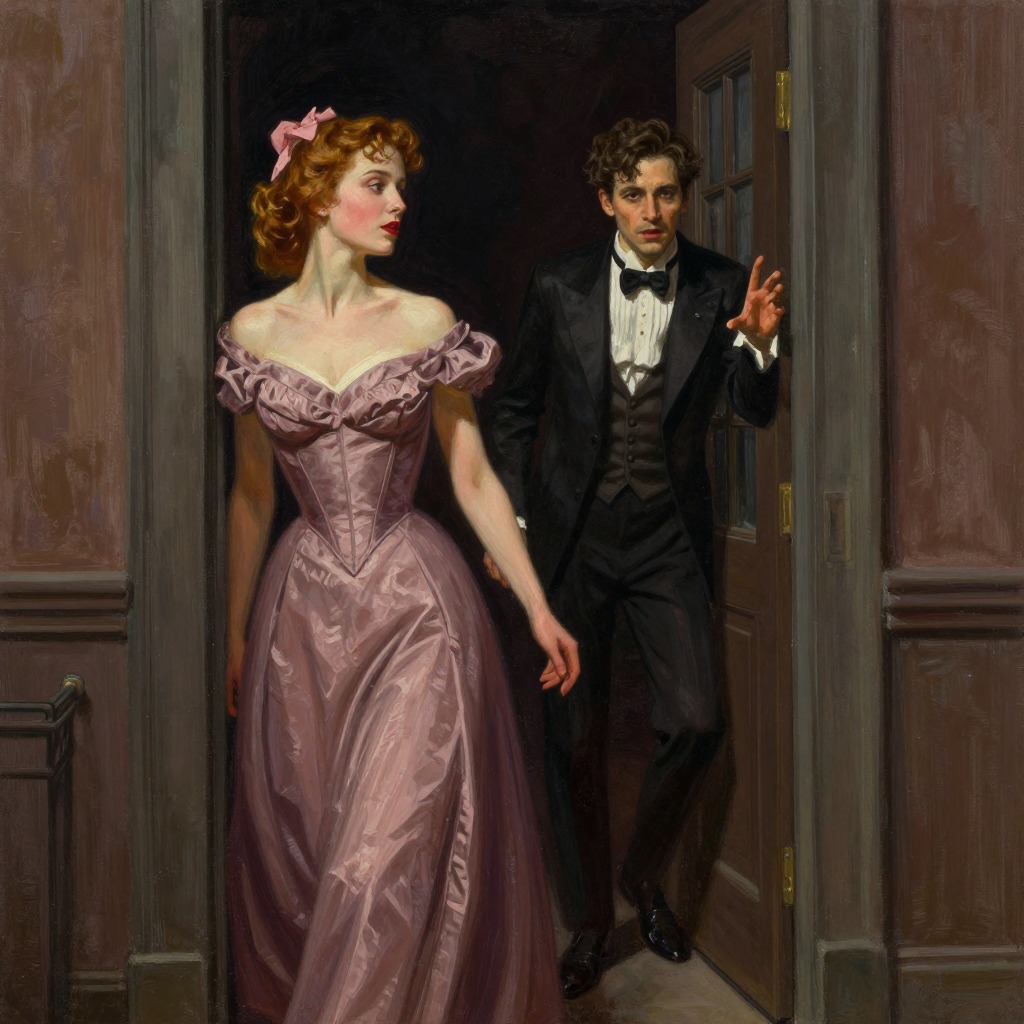
The Doctor is a minor but structurally decisive character in A Streetcar Named Desire, the agent of the state who appears in the final scene to escort Blanche DuBois from the Kowalski apartment to a mental institution. His role begins as an emblem of impersonal authority—the "unmistakable aura of the state institution with its cynical detachment"—but ends as the sole figure in the play to offer Blanche the kindness she has always craved. In a drama saturated with cruelty, deception, and raw desire, the Doctor's gentle handling of Blanche provides the play's only untainted moment of compassion, allowing her to exit the stage not as a broken woman but as a tragic heroine who, in her final line, articulates the principle by which she has lived: "I have always depended on the kindness of strangers."
Arrival and Initial Presentation
The Doctor first appears around the corner of the building, accompanied by a Matron, as the poker game is underway in the Kowalski kitchen. The stage directions emphasize the "gravity of their profession" and the "unmistakable aura of the state institution with its cynical detachment." He rings the doorbell, interrupting the murmur of the game, and Eunice Hubbell, who has been helping Stella Kowalski prepare Blanche for departure, goes to answer. When Blanche, dressed in a Della Robbia blue jacket and expecting Shep Huntleigh, asks if it is "the gentleman I was expecting from Dallas," Eunice tells her it is, and Blanche steps out onto the porch. There she stops short, gasping, and whispers to Stella, "That man isn't Shep Huntleigh." The Doctor's simple greeting—"How do you do?"—is the first signal that the promised rescue is a lie.
Confrontation and the Struggle
When Blanche realizes the truth, she retreats into the apartment, and the Doctor, speaking sotto voce to Stanley Kowalski, says, "Doc, you better go in." He then motions to the Matron, instructing her, "Nurse, bring her out." The Matron advances on one side, Stanley on the other, and a struggle ensues. Blanche, in panic, scratches at the Matron, who pinions her arms and declares, "These fingernails have to be trimmed." The Doctor asks, "Jacket, Doctor?" and the Matron inquires if a straitjacket will be necessary. The Doctor replies, "Not unless necessary," a small but crucial qualification that signals his reluctance to escalate the violence. As Blanche slips to her knees, the scene is filled with lurid reflections on the walls, the distorted "Varsouviana" polka, and the cries and noises of the jungle, creating a nightmarish atmosphere of entrapment.
The Transformation: From Authority to Kindness
The Doctor's decisive moment comes when he removes his hat and becomes "personalized." The stage directions note that "the unhuman quality goes" and his voice becomes "gentle and reassuring" as he crosses to Blanche and crouches in front of her. He speaks her name—"Miss DuBois"—and her terror subsides a little. The lurid reflections fade from the walls, the inhuman cries die out, and her own hoarse crying is calmed. He tells the Matron, "It won't be necessary," and when Blanche faintly asks, "Ask her to let go of me," he commands, "Let go." The Matron releases her, and Blanche extends her hands toward the Doctor. He draws her up gently, supports her with his arm, and leads her through the portieres. In this gesture, the Doctor transforms from an agent of the state into a surrogate for the gentleman Blanche had been expecting, offering the physical support and dignity that no one else in the play has provided.
The Final Exit and Thematic Significance
As the Doctor leads Blanche through the kitchen, past the poker players who stand back, she holds tight to his arm and speaks her famous final line: "Whoever you are—I have always depended on the kindness of strangers." She allows him to lead her as if she were blind, and they go out on the porch, followed by the Matron. Stella Kowalski cries out her sister's name from the stairs, but Blanche walks on without turning, and they disappear around the corner of the building. The Doctor's role is thus the inverse of Stanley Kowalski's: where Stanley has used physical force to dominate and destroy Blanche, the Doctor uses gentle authority to lead her away. His kindness, however, is also a form of removal—he is the agent of the institution that will confine her. The play's final irony is that the only person who treats Blanche with the tenderness she has sought is the one who takes her to a mental hospital. The Doctor's presence underscores the tragedy of a woman who, having lost everything—her family, her home, her reputation, her sanity—must depend on the kindness of a stranger whose job is to institutionalize her.